
 Golden Founder
Most rental platforms only handle one category - housing, cars, gear, or tasks - forcing users to juggle multiple apps, logins, and payment systems. OSTVA fixes this by combining item rentals and local task services in one community-first marketplace, so you can find what you need in a single place.
Most rental platforms today are built around one specific category. One app helps you book an apartment. Another lets you rent a car. A different one focuses on camera gear. Another connects you with freelancers. Each platform does one thing well, but almost none of them talk to each other. The result is fragmentation — and real friction for everyday life.
The Fragmented Reality of Today's Sharing Economy
Let's take a simple example. Imagine you're planning a trip to Amsterdam:
You book your apartment on one platform.
You search a second app for bicycles to cruise the canals.
You browse a third site for a GoPro to capture the trip.
You find a fourth platform for a local guide to show hidden spots.
Four different logins. Four payment systems. Four review structures. Four levels of trust. The sharing economy has grown vertically (deeper in one niche) but rarely horizontally (across categories). Platforms force you to think in silos - but life doesn't work that way.
Why Category Silos Hurt Users
You don't think in categories. You think in needs: a place to stay, transportation, equipment, help. When every need requires a different app, coordination becomes exhausting — especially when some services don't even exist in the area you're visiting.
What Real Life Actually Looks Like
Life is fluid. Needs overlap. Resources overlap. People's skills overlap. Yet digital marketplaces rarely reflect that — until you experience a unified platform.
Now imagine opening OSTVA and searching your area. You see apartments, bicycles, cameras, scooters, event gear, guided tours, and students offering photography - all verified, all in one wallet, one messaging channel, one reputation history.
That kind of horizontal marketplace doesn't just simplify planning. It changes behavior: you default to access instead of ownership, trust compounds across categories, and coordination feels natural.
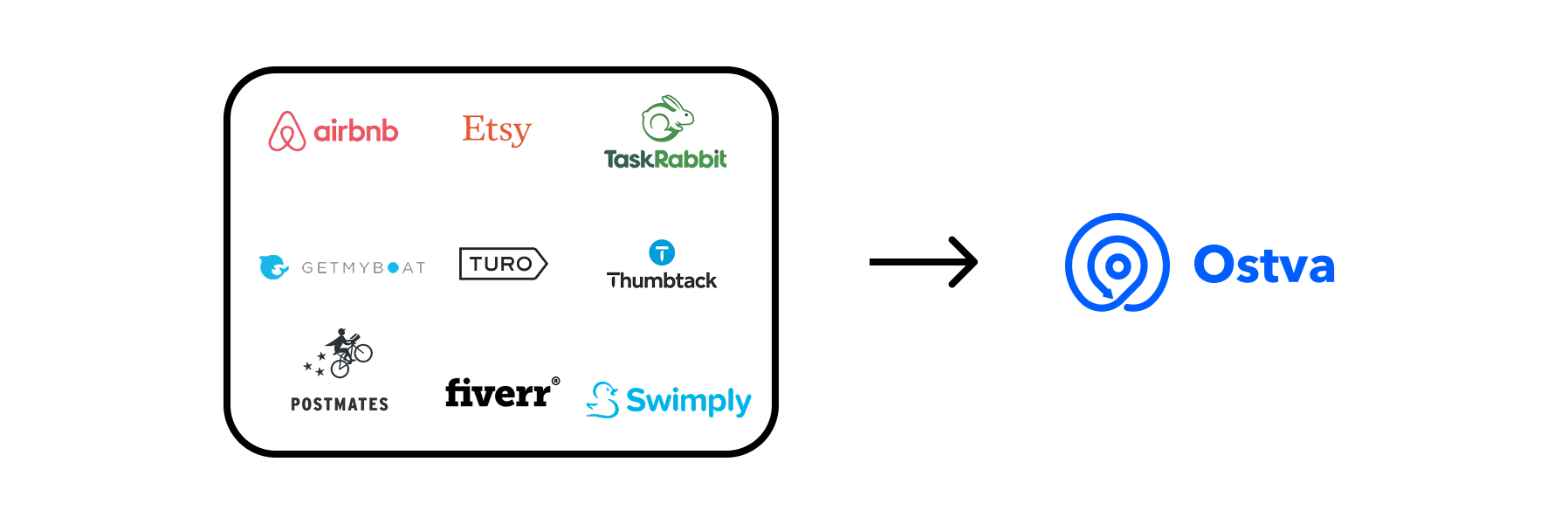
OSTVA vs. Fragmented Platforms
Need | Typical rental apps | OSTVA |
|---|---|---|
Book housing | App #1 | Same app |
Rent a bike or gear | App #2-3 | Same app |
Hire local help | App #4+ | Same app |
One wallet & reputation | No | Yes |
Local community focus | Varies | Built in |
Why OSTVA Is Built Differently
Today, most platforms optimize for scale within a niche. OSTVA optimizes for real-life usage patterns - messy, layered, and interconnected. By combining rentals and services, OSTVA removes friction and unlocks more value for both sides. (See how this compares to other apps in our 2026 platform comparison.)
Whether you want to earn money on campus or try something new like an eFoil rental, OSTVA is designed to be the one place where access itself is effortless.
Explore what's possible with OSTVA
Join the platform, list what you own, or discover what's already around you.
Get startedFrequently Asked Questions
Why do most rental platforms feel incomplete?
How is OSTVA different from other sharing apps?
Can I use OSTVA for both renting items and finding help?
Is OSTVA available beyond KSU?
Read more on the OSTVA blog
Guides on rentals, campus earning, and the sharing economy.
Browse articlesWritten by
OSTVA Team
The OSTVA team shares stories, guides, and updates from the community-first sharing economy.